 |
||||


News
Stainless Steel Market – Key News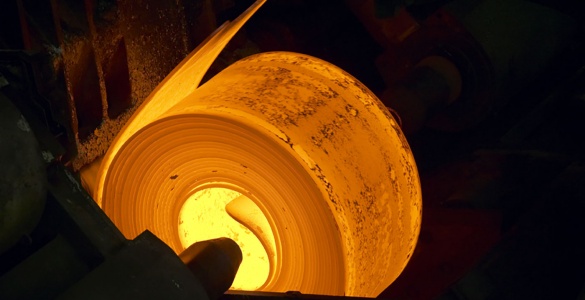 The stainless steel market in 2016 experienced strong growth, structural shifts, and rising global competition, making it a significant year for the industry.
One of the biggest highlights was the surge in global production. Stainless steel output increased by about 10% year-on-year, reaching roughly 45–46 million metric tons, marking a record high for the sector . This growth was largely driven by China, whose production alone jumped by nearly 15.7%, reinforcing its dominance in the global market . Other regions such as the Americas and Asia (excluding China) also saw moderate growth, although Europe’s performance was more mixed.
Another major development was the impact of raw materials, especially nickel. Rising expectations of nickel supply shortages pushed forecasts of higher stainless steel prices, highlighting the strong link between alloy metals and steel pricing . At the same time, global demand remained uneven, with some markets experiencing price declines due to weak consumption, particularly in parts of Asia .
Trade tensions also shaped the market. Governments and producers increasingly focused on anti-dumping measures and import controls, as cheaper exports—mainly from China—put pressure on domestic industries. In several regions, imports surged significantly, intensifying disputes between producers and end-users .
Finally, 2016 saw major industry consolidation, most notably the merger of Baosteel and Wuhan Iron & Steel, forming China Baowu—one of the world’s largest steel producers. This move reflected a broader trend toward scale, efficiency, and global competitiveness .
In summary, 2016 was defined by rapid production growth, China’s expanding influence, raw material volatility, and increasing trade protection—factors that continue to shape the stainless steel market today. 【 Go Back 】 | 【 Print 】 | 【 Close this window 】 |
Contact us
Tel: +86-551-65587072
Fax: +86-551-65587075
E-mail: info@cnpeakmetal.com
MSN: cnpeakmetal@gmail.com
Skype: cnpeakmetal
Fax: +86-551-65587075
E-mail: info@cnpeakmetal.com
MSN: cnpeakmetal@gmail.com
Skype: cnpeakmetal